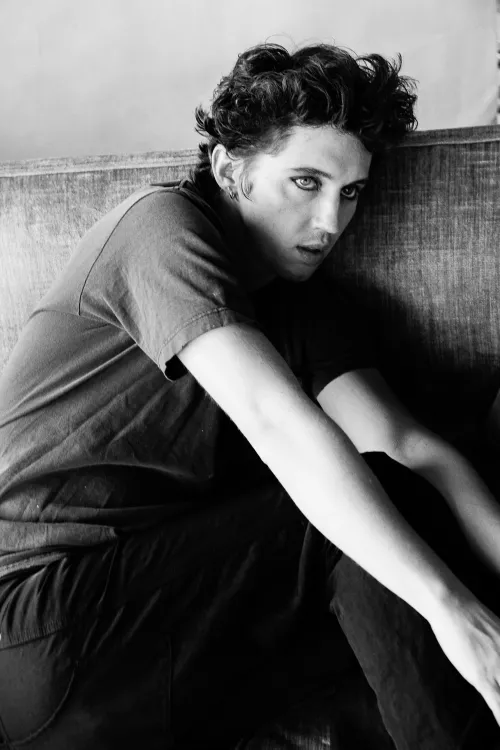
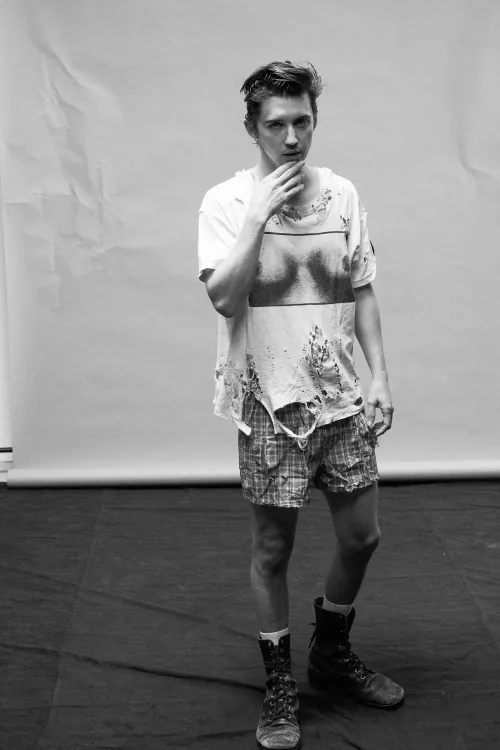



Troye Sivan has always orbited women more comfortably than men. "The divine feminine is everywhere," he's said of the title track, an ode to the women who've stuck around while boys and jobs came and went. It's a deliberate choice to open the record on that note and to name the whole album after it, because everywhere else on ‘She's the Best’, Sivan is chasing someone who hasn't shown up yet. The women are the constant. The man is the absence the rest of the record is built around.
The women are the constant. The man is the absence the rest of the record is built around.
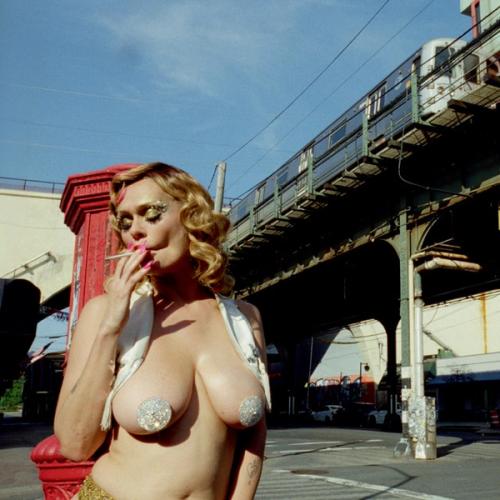
The title track itself earns that framing, building from timid, spoken-word observation into something rattling and genuinely celebratory, with Sivan back in drag, Nicole Kidman cast as "that girl," and Charli XCX tucked into the backing vocals. It's the clearest statement of intent on the record: an eclectic, electro-pop song with a real point of view underneath it.
‘Party’ follows the same instinct toward hedonism but in a different key: less personal tribute, more near-ritual affirmation of partying itself, a message that carries real weight in queer culture specifically, built from a deliberately raucous, medieval-flavoured video (Ian McKellen included) and a Madonna sample lifted from her 2000 single ‘Music’. It's not the first time Sivan has raided a genuine banger for material, 'Something to Give Each Other' had 'Got Me Started' doing something similar, and by now it reads as a recurring move: borrow something everyone already loves, then make it entirely his own for three minutes.
Then the record swerves hard. ‘I Do This For You’ leans the opposite way from ‘Party’'s crowd-pleasing Madonna grab, built instead from a deliberately obscure sample, exactly where Sivan's cited Avalanches influence is most audible: a patchwork built from other people's noise rather than a clean pop structure. The song breaks down mid-track into a bridge stitched together from pop-up ads, an ugly, accurate mirror of the algorithmic loneliness that followed months of touring, and it's also where the record's real subject first gets named: the chorus dedicated flatly to "whoever you are," finally naming the absence the album's been circling.
‘Cowboy’ arrives directly after it and reads gentler on the surface, all soft keys and unhurried guitar, but the lyric underneath, shackles, a busted lip, kneeling on the floor, is smitten in a way that shades into something more dangerous: surrender dressed up as devotion rather than straightforward sweetness. Whiplash like that happens constantly across the record, and ‘Embarrassingly’, nostalgic enough to name-check owning an iPhone 6S, is one of the rare moments where the record's two instincts, acoustic warmth and glitchy breakbeat, actually fuse rather than sitting side by side for contrast.
‘Le Boy’ might be the most purely thrilling thing here sonically, and says more about the album's real subject than a conventionally sweet song could. It's a search, waiting and preparing for someone he hasn't met yet, until the lyric twists late on into something closer to certainty than searching, as if the stranger he's hunting for was already fated long before Troye started writing.
If 'Something to Give Each Other', Sivan's biggest commercial moment to date, was built entirely for the party, pure euphoria with a vulnerable undercurrent, ‘She's the Best’ is what happens afterward. The transitions here between euphoria and longing aren't sloppiness so much as a clear structural choice: wanting the high to still belong to him, even once parading himself around stops meaning much. It's a record that makes complete sense as a follow-up and spirals somewhere close to mania, self-reflection tipping into obsession, closing not on resolution but on the same anticipation it opened with.
The transitions here between euphoria and longing aren't sloppiness so much as a clear structural choice.
None of this happens in isolation. Leland co-writes every single track here, the one constant presence across an otherwise scattered record, proof he works best bouncing ideas off someone else. Jack Antonoff, present across several of the album's bigger, more maximalist moments, brings what he usually brings to the artists who hire him: a loose, feel-over-precision approach, nothing too measured, matching Sivan's own description of wanting something that felt random rather than polished. George Daniel turns up alongside him repeatedly too. Finneas, by contrast, works entirely alone on one song, the record's single moment built outside everybody else's orbit.
What all this adds up to is, deliberately, not tight. Sivan has said he wanted something that felt "random, off the cuff" rather than perfect pop, and on that goal, he's succeeded completely: harder to sell in one sentence than its predecessor, and exactly the kind of record a new chapter should sound like, less interested in being loved instantly than lived with, taken in for its lows as much as its highs, its yearning as much as its climaxes.


